
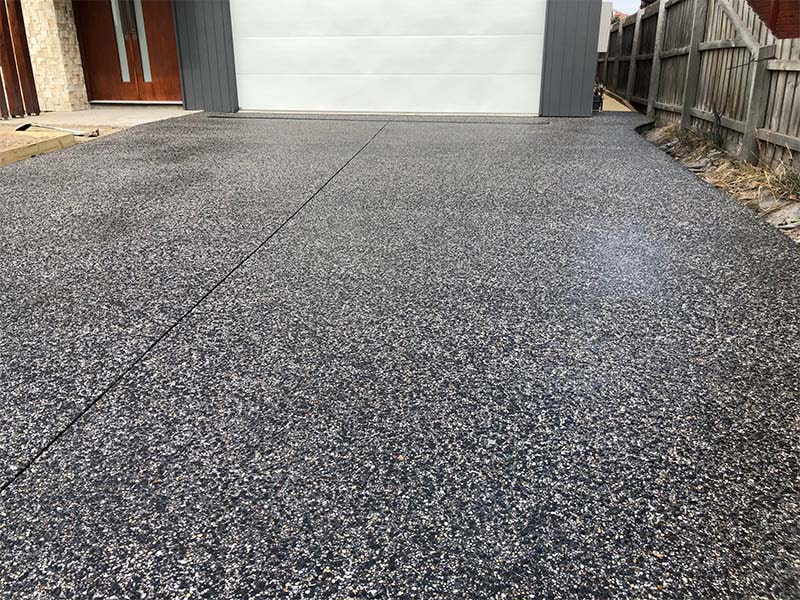
How much does an exposed aggregate driveway cost in Cairns? Most jobs run roughly $95 to $150 per square metre, supplied and installed, but the final price depends on your site, your stone and your design.
This guide breaks down the costs, the colour options, the downsides nobody mentions, and how to hire the right concreter for Cairns’ wet, humid, high-UV conditions. If you’d rather talk to a local team now, see our exposed aggregate driveways in Cairns service page.
How Much Do Exposed Aggregate Driveways Cost in Cairns?
Most Cairns exposed aggregate driveways cost roughly $95 to $150 per square metre, supplied and installed. The final price depends on site conditions, the aggregate you choose and the complexity of the job.
For a typical single driveway of 40 to 80 m², that’s around $4,000 to $12,000. Larger double-width and long acreage driveways cost more
Cost by Driveway Size
| Driveway Size | Typical Use | Approximate Cost* |
|---|---|---|
| 40 m² | Single-car driveway | $3,800 – $5,800 |
| 60 m² | Standard two-car driveway | $5,700 – $8,700 |
| 80 m² | Wide double driveway | $7,600 – $11,600 |
| 120 m² | Long or acreage driveway | $11,400 – $17,400 |
*Indicative, based on $95–$145/m². Premium or coloured mixes may cost more.
What Affects the Price?
- Aggregate type. Standard local stone costs less than premium or specialty blends.
- Colour and pigment. Coloured bases and feature borders add cost.
- Site preparation. Slopes, poor drainage, tree roots, soft soil and removing an old driveway all add labour.
- Slab thickness and reinforcement. Driveways for heavy vehicles, boats or caravans need thicker, better-reinforced slabs.
- Access. Tight access limits machinery and pump options.
- Design features. Borders, saw-cut patterns and curves add time.
- Council requirements. Some driveways need approval first (see Council Approval and Licensing below).
- Sealing. Quality UV-stable sealer is an extra cost, and a worthwhile one.
Cheap Exposed Aggregate Driveways in Cairns: What to Watch For
“Cheap” and “good value” aren’t the same. Most of the cost is labour and preparation, not concrete. Cutting corners on base compaction, reinforcement or drainage leads to cracks and settlement that cost far more to fix than you saved.
If you want to keep costs down, you have better options than a bargain quote:
- Choose a standard local aggregate rather than a premium blend
- Keep the design simple, with fewer borders and curves
- Resurface a sound existing slab instead of replacing it (see the resurfacing section below)
- Get itemised quotes and compare them line by line
How to Get an Accurate Quote
A reliable quote should itemise:
- Area in square metres
- Site preparation and excavation
- Base material and slab thickness
- Reinforcement
- Aggregate type and colour
- Control joints and edging
- Sealing
- Removal of any old concrete
Ready for a number? Request a free quote from our Cairns team.
What Is an Exposed Aggregate Driveway?
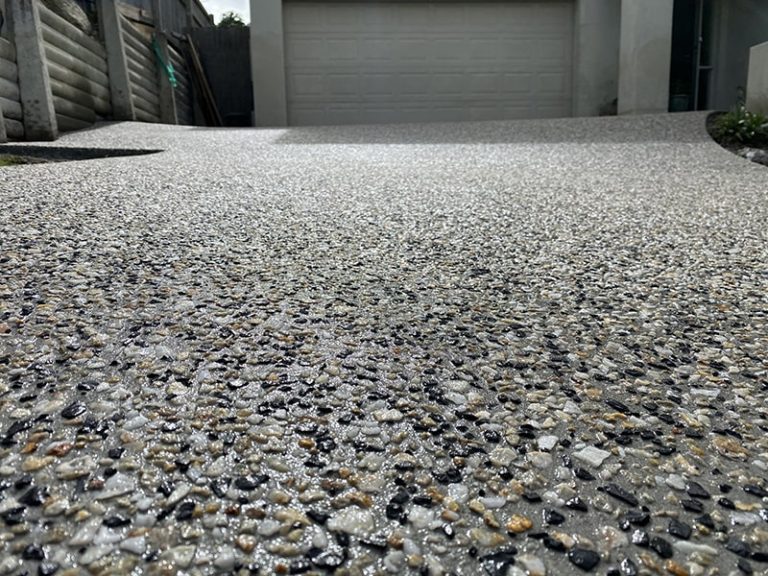
An exposed aggregate driveway is a concrete driveway with the top layer of cement paste removed. This reveals the stones, or “aggregate”, set into the surface.
The result is a textured, natural-looking finish that’s skid-resistant and far more distinctive than plain broom-finished concrete. Because every pour is unique, your driveway won’t match your neighbour’s, even with the same stone.
Common aggregates include:
- River pebbles in smooth, rounded tones of cream, brown, grey and black
- Crushed granite or basalt for a sharper, more contemporary look
- Quartz for a lighter, brighter surface
- Blended mixes combining several stone types and sizes
Exposed aggregate suits far more than driveways. It’s also popular for patios, paths and pool areas. If you’re comparing options, see our full concrete driveways service.
How the Exposed Finish Is Created
There are three main methods:
- Seeded (top-dressed) aggregate. Selected stones are scattered over freshly poured concrete and pressed in. This gives consistent colour and stone density.
- Integral aggregate. Stones are mixed into the concrete. After the slab starts to set, the surface paste is washed or brushed away. The industry body Cement Concrete & Aggregates Australia describes this technique in its technical briefings.
- Honed or polished. The surface is ground back so the stones sit flat, creating a smoother finish (covered below).
Your concreter will recommend a method based on the look you want and how the driveway will be used.
Is Exposed Aggregate Good for Driveways in Cairns?
Yes. For most Cairns homes, exposed aggregate is one of the best driveway options available.
It’s built for heavy use. A properly poured slab handles cars, 4WDs, boats and trailers. The stones are locked into structural concrete, so the surface stays hard-wearing under load.
It handles the wet season. Cairns gets around 2,000 mm of rain a year, mostly in the summer months, according to Tourism Australia. The textured surface gives natural grip when it’s wet.
It hides wear and stains. The varied stone pattern camouflages oil drips, tyre marks and leaf tannins far better than smooth grey concrete.
It’s colour-stable under UV. Colour comes from the stone itself, so it doesn’t fade like a surface pigment can. Sealers are the part that needs periodic attention.
It adds kerb appeal. A well-designed driveway lifts the whole front of a home and supports resale value.
The main trade-offs are upfront cost and periodic resealing, both covered in this guide.
Downsides of Exposed Aggregate Driveways
No surface is perfect. Here are the real drawbacks and how to manage each one.
- Higher upfront cost. It costs more than plain concrete or gravel. Over 20-plus years the durability tends to offset the difference.
- It needs sealing. Unsealed aggregate can stain and dull, and in Cairns’ humidity sealing also helps resist mould and algae. Our team recommends cleaning and resealing at least every two years.
- Loose stones can occur. Poor workmanship or an overly aggressive wash-back can leave stones poorly bonded. Experience matters here.
- Uneven texture. The rougher surface is less comfortable barefoot and harder to sweep than smooth concrete. Ask about a smaller aggregate size if the driveway doubles as a play area.
- Repairs need skill. Patching is possible, but matching colour and stone pattern takes an experienced team.
- Cracking can still happen. All concrete can crack. Correct base prep, reinforcement and control joints reduce the risk significantly.
- Mould in shaded, damp spots. Driveways under trees or beside walls can grow mould and algae in humid conditions. Sealing, drainage and periodic cleaning keep it under control.
Most of these are avoidable with quality workmanship and basic maintenance.
Exposed Aggregate Driveway Colours and Styles
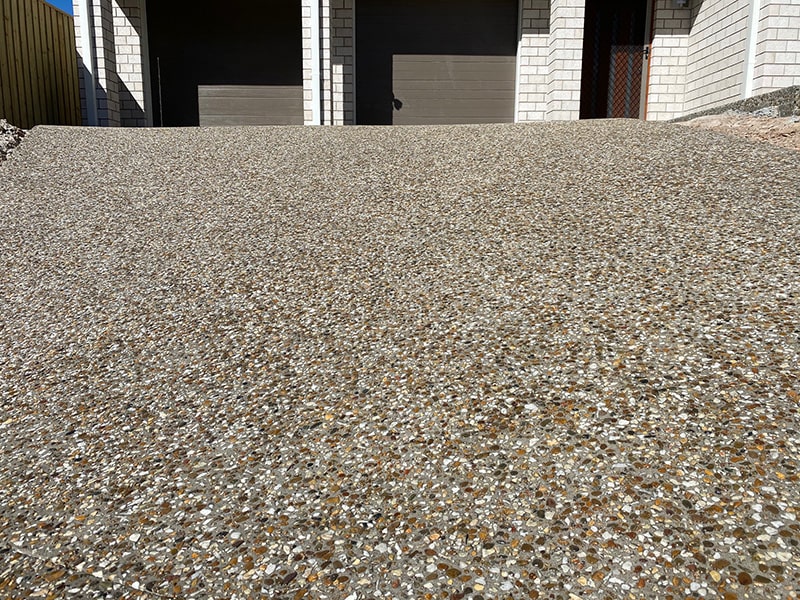
Colour is one of the most-searched parts of this topic, and it’s where you make the driveway your own. Colour comes from three things: the stones, the concrete base and the sealer.
Popular palettes:
- Warm neutrals (cream, sand, tan) suit light render and Queenslander-style homes
- Charcoal and greys suit modern, dark-toned architecture
- Earthy browns and terracottas suit natural landscaping and timber features
- Black and dark basalt give dramatic, high-contrast results
- Multi-toned blends are forgiving and hide dirt well
Salt and Pepper Exposed Concrete
“Salt and pepper” is a fine, speckled finish that mixes light and dark small stones. It gives a subtle, even, granite-like look and suits contemporary homes and pool surrounds. It’s finer and more refined than a chunky pebble finish.
Exposed Pebble Concrete
Exposed pebble concrete uses rounded river stones for a softer, more natural appearance than crushed rock. It’s a favourite for tropical, resort-style landscaping and pairs well with lush Cairns gardens.
Polished Exposed Aggregate Concrete
Polished exposed aggregate is ground flat so the stones show as a smooth, glossy surface. It’s more common indoors and around pools. On a driveway, a lightly honed finish can work, but check wet slip resistance first. Australian slip ratings are classified under AS 4586, and your concreter can advise what suits your site.
Coloured Concrete Bases
Adding oxide to the concrete changes the background colour between the stones. A dark base makes stones pop, and a light base gives a soft, blended look. We can also colour-match borders and saw-cut patterns. Our resurfacing and stencilling service offers further decorative options.
How to Choose (and Test) Your Colour
- Match your roof and render, not your neighbour’s driveway.
- View exposed aggregate concrete samples outdoors. Colours shift between shade and full sun.
- Ask for wet samples. Sealer and rain both deepen colour.
- See completed driveways in similar light if you can.
- Consider heat. Very dark surfaces get hot in FNQ summers.
Small samples can look quite different at driveway scale, so ask to see recent jobs as well. Not sure what look you want? Send us a message and we’ll help you narrow it down
Exposed Aggregate vs Other Driveway Materials
| Material | Typical Cost / m² | Typical Lifespan | Maintenance | Best For |
|---|---|---|---|---|
| Exposed aggregate | $95 – $150 | 25 – 40+ yrs | Low – medium | Durability + style |
| Plain concrete | $70 – $110 | 25 – 40 yrs | Low | Simple, lower budget |
| Stencilled concrete | $100 – $160 | 20 – 30 yrs | Medium | Pattern effects |
| Asphalt | $40 – $80 | 15 – 25 yrs | Medium | Long rural drives |
| Pavers | $100 – $200+ | 25 – 40 yrs | Medium | Custom patterns |
| Gravel | $20 – $50 | Ongoing top-ups | High | Lowest cost |
- vs plain concrete: better grip, hides stains better, looks more premium
- vs pavers: a solid slab won’t shift, sink or grow weeds in the joints
- vs stencilled concrete: stencilled colour sits in the surface and can wear, while aggregate colour is in the stone
What Is the Best Driveway Material in Australia?
There’s no single best material. It depends on climate, budget, use and style. But concrete, including exposed aggregate, is widely seen as the best all-round choice for durability and value.
- Best overall durability: concrete, including exposed aggregate
- Best for tropical, high-rainfall areas: exposed aggregate or plain concrete with good drainage
- Cheapest upfront: gravel or asphalt
- Best for custom patterns: pavers or decorative concrete
- Best for long rural drives: compacted gravel or asphalt
For humid, high-rainfall regions like Cairns, exposed aggregate stands out. It resists heavy rain, gives grip, handles heavy vehicles and doesn’t degrade in UV the way bitumen can.
How Exposed Aggregate Driveways Are Installed
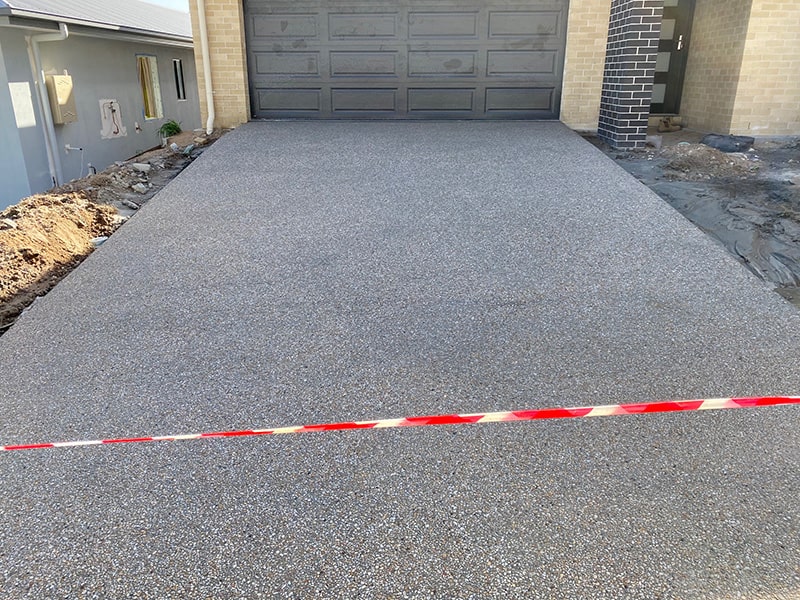
A quality installation follows a clear process. Knowing it helps you judge quotes.
- Site inspection and design. Measurements, levels, drainage review and access checks. Colour and aggregate are chosen.
- Excavation and removal. Old surfaces, roots and soft soil are removed.
- Base preparation. Compacted road base is laid and levelled.
- Formwork and drainage. Edges are formed, with falls designed to move water away from the house and garage.
- Reinforcement. Steel mesh or bar controls cracking.
- Concrete pour. Concrete is placed and levelled, and aggregate is seeded in if that method is used.
- Exposing the aggregate. At exactly the right moment the surface paste is washed or brushed away. Timing here is critical.
- Curing. The slab cures for several days. Keep vehicles off for as long as your concreter specifies.
- Saw-cutting joints. Control joints direct any shrinkage cracks into neat lines.
- Sealing. Sealer is applied once the surface is clean and dry.
Best time to pour in Cairns: the drier months, roughly May to October. The Bureau of Meteorology notes that this period is dominated by the sub-tropical ridge, while the monsoon trough sits close to Cairns from December to March (BoM Cairns climate). Wet-season pours are possible but need careful rain and curing management.
Cairns Climate: What Your Driveway Has to Survive
Cairns is tough on outdoor surfaces. Long-term rainfall and temperature figures are published in the Bureau of Meteorology climate statistics for Cairns.
| Local Challenge | Effect on Driveway | Solution |
|---|---|---|
| Heavy wet-season rain | Erosion, pooling, slippery surfaces | Proper falls, drainage, textured finish |
| High humidity | Mould, algae, tannin stains | Quality sealer, occasional cleaning |
| Intense UV | Sealer breakdown, hot surfaces | UV-stable sealer, lighter colours |
| Soft or reactive soils | Cracking, settlement | Strong base, reinforcement, joints |
| Tree roots and leaf litter | Lifting, staining | Root management, regular sweeping |
| Cyclone-season rain and debris | Surface damage, water flow | Robust slab, good drainage design |
Drainage matters most. Water pooling on or beside a driveway causes most long-term problems. Always ask your concreter how they’ll manage falls and stormwater.
Maintenance, Cleaning and Resealing
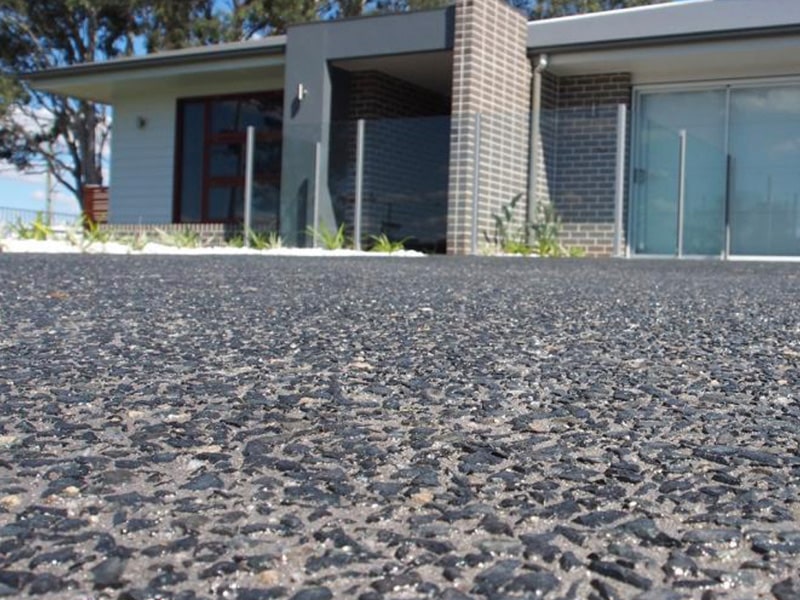
Exposed aggregate is low-maintenance, not no-maintenance.
Everyday care:
- Sweep or blow off leaves to prevent tannin staining
- Hose down periodically
- Clean oil and fuel spills promptly
- Keep gutters and drains clear
Deep cleaning: pressure washing removes mould, dirt and grime. Use moderate pressure and a wide fan tip, because holding the nozzle too close can dislodge stones. Our concrete cleaning and resealing service uses professional equipment and finishes with a UV-protected sealer.
Resealing: we recommend at least every two years. Signs it’s time:
- Water no longer beads on the surface
- Colour looks dull or patchy
- Stains soak in easily
- Mould returns quickly after cleaning
Repairs: small chips and loose stones can often be repaired. Cracked or damaged sections can be cut out and replaced, and an experienced team can match colour tones closely.
Can You Resurface an Existing Driveway With Exposed Aggregate?
Often, yes. If your existing slab is structurally sound, a bonded overlay can give it a fresh decorative finish for less than full replacement. Learn more about our concrete resurfacing and stencilling.
Resurfacing works best when:
- The slab is solid with only minor cracks
- There’s no major settlement or drainage failure
- The surface can be cleaned and prepared to bond properly
Replacement is better when:
- The slab is badly cracked, sunken or heaving
- Drainage problems come from the slab itself
- The concrete is too thin or poorly made
A professional inspection tells you which route makes sense.
Council Approval and Licensing in Cairns
Council approval. Cairns Regional Council says a new driveway may need an Operational Works permit, and that a permit must be in place before work starts. It publishes a driveways and crossovers guide and a self-checklist fact sheet to help you check. Council also notes that basic maintenance, such as repairing cracks or sealing the crossover area, doesn’t need approval. Requirements vary by property, so confirm yours before you build.
Contractor licensing. Queensland contractors must be licensed for building work above a set value. You can look up any contractor on the QBCC’s find a licensed contractor page. If a contractor can’t show you a licence, don’t hire them.
How to Choose an Exposed Aggregate Concreter in Cairns
Exposed aggregate is a skilled trade, and much of the result comes down to timing and technique. Here’s what to check.
Checklist:
- Licence. Verify the QBCC licence number (see above).
- Insurance. Public liability at minimum, plus any statutory insurance required for the job.
- Local experience. Ask for examples in Cairns conditions.
- Recent work. View completed driveways, including ones a few years old.
- Written, itemised quote. Scope, materials, sealing and warranty in writing.
- Site prep approach. Base depth, compaction, reinforcement, drainage.
- Communication. Do they explain things clearly and follow up?
- Warranty. Ask what’s covered and for how long.
Red flags:
- Very low quotes that don’t specify base prep or reinforcement
- Cash-only with no paperwork
- Reluctance to show past work
- Pressure to decide on the spot
- No clear drainage plan
Questions to ask every concreter:
- What slab thickness and reinforcement will you use?
- How will you manage drainage on my block?
- Which aggregate do you recommend, and can I see samples?
- What sealer do you use, and when do you apply it?
- What warranty do you offer?
- How long before I can drive on it?
Want to know who you’d be dealing with? Meet the Concreters Cairns team.
Exposed Aggregate in Brisbane, Sydney and Perth: How Cairns Differs
If you’ve searched for exposed aggregate in Brisbane, exposed aggregate concrete in Sydney or exposed aggregate colours in Perth, you’ll know the style is popular right across Australia. But conditions differ, and that changes what works best.
- Brisbane: similar humidity and storm risk, with cooler winters. Design principles are close to Cairns.
- Sydney: cooler overall, and popular colours often lean toward greys and natural stone tones.
- Perth: hot, dry summers and sandy soils. Base preparation and heat management are key, and lighter aggregates are popular.
- Cairns: tropical, with heavy wet-season rain, high humidity and intense UV. Drainage, mould resistance and UV-stable sealing matter more here than in most southern cities.
Colour trends travel between cities, but a driveway built for Cairns should be engineered for Cairns. Ask to see local examples.
Frequently Asked Questions
How much does an exposed aggregate driveway cost?
In Cairns, expect roughly $95 to $150 per square metre supplied and installed. A typical 60 m² driveway often lands between about $5,700 and $9,000, depending on site conditions, aggregate and colour. An itemised quote gives you the accurate figure.
What are the downsides of exposed aggregate concrete driveways?
The main downsides are a higher upfront cost than plain concrete, the need for periodic resealing, the risk of loose stones if poorly installed, a rougher surface underfoot, and harder colour-matching for repairs. Most are avoidable with skilled installation and basic maintenance.
Is exposed aggregate good for driveways?
Yes. It’s durable, slip-resistant, relatively low-maintenance and attractive. It suits Cairns’ wet, humid, high-UV conditions well, provided drainage and sealing are done properly.
What is the best driveway material in Australia?
It depends on climate and budget, but concrete, including exposed aggregate, is widely regarded as the best all-round choice for durability and value. Gravel and asphalt cost less upfront but need more upkeep or earlier replacement.
How long does an exposed aggregate driveway last?
A well-installed slab can last 25 to 40 years or more. The sealer needs refreshing regularly.
Is exposed aggregate slippery when wet?
Generally not. The textured stones give good grip, which is a big reason it’s popular in high-rainfall areas. Honed or polished finishes are smoother, so discuss wet slip resistance with your concreter.
Can I pressure wash exposed aggregate?
Yes, using moderate pressure and a wide fan tip. Too much pressure, or holding the nozzle too close, can dislodge stones. A professional cleaning and resealing service is the safer option.
Can exposed aggregate be laid over an existing driveway?
Often, yes, if the existing slab is structurally sound. An inspection will confirm whether an overlay or full replacement is better. See our resurfacing service.
How long before I can drive on a new exposed aggregate driveway?
This depends on the mix and the weather, so follow your concreter’s specific advice. Heavy vehicles need longer than cars.
How much more does exposed aggregate cost than plain concrete?
Expect it to cost more than a standard broom-finished slab because of the extra labour, materials and skill. Ask your concreter to quote both so you can compare.
Do exposed aggregate driveways need sealing?
Sealing isn’t legally required, but it’s strongly recommended. It protects stone bonding, resists stains and mould, and enhances colour, especially in Cairns’ humid climate.
What colours are available?
Options include creams, tans, greys, charcoals, browns, blacks and multi-toned blends. Salt-and-pepper mixes, pebble finishes and coloured concrete bases give many more variations.
Get a Free Exposed Aggregate Driveway Quote in Cairns
Ready to upgrade your driveway? Concreters Cairns helps homeowners choose the right aggregate, colour and finish for Cairns conditions, then installs it to last. See our full exposed aggregate driveways in Cairns service page to learn more about how we work.
What you get:
- A free quote and guidance on colours, samples and design
- Correct base prep, drainage and reinforcement
- UV-protected sealing to protect your investment
Get your free exposed aggregate driveway quote →
You can also explore our concrete driveways, resurfacing and cleaning and resealing services.